FIREDEFEND | Joint Steps Towards Successful Implementation

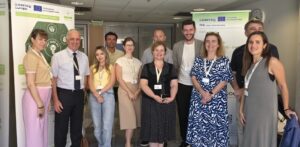
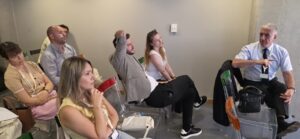
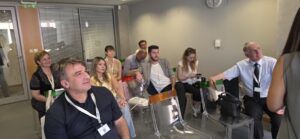
On 22 September 2026, activities within the FIREDEFEND – “Fire Detection and Enhanced Fire Emergency Network for Waste Disposal” project continued with the second working meeting of the project partners, organised by the Centre for Development of the South-East Planning Region (CDSEPR). Dedicated to the exchange of knowledge, experience and good practices, the second day focused on the practical implementation of the project, coordination among partners and defining the next joint steps.

📌 Particular emphasis was placed on the pilot actions and the establishment of a modern thermal camera system for early fire detection and monitoring. As part of the cross-border system, thermal cameras are planned to be installed at locations in Giannitsa, Kilkis and Edessa in Greece, while in the South-East Planning Region of North Macedonia, the system will be established in the Municipality of Bosilovo.

Through these pilot actions, FIREDEFEND will contribute to improved monitoring of high-risk areas, timely detection of potential fires and faster response by the relevant services on both sides of the border.

🔥🌿🇬🇷🇲🇰 From planning and knowledge exchange to concrete actions and solutions on the ground. Through the joint efforts of partners from North Macedonia and Greece, FIREDEFEND is turning cross-border cooperation into practical action for improved fire prevention, risk management and environmental protection.

🇪🇺 The FIREDEFEND project is co-funded by the European Union through the Interreg VI-A IPA Greece – North Macedonia 2021–2027 Programme.

FIREDEFEND | Joint Solutions for Fire Prevention and Waste Management

On 21 September 2026, the Centre for Development of the South-East Planning Region (CDSEPR) hosted an event within the framework of the FIREDEFEND – “Fire Detection and Enhanced Fire Emergency Network for Waste Disposal” project, dedicated to the exchange of knowledge, experience and good practices among institutions, project partners, experts and relevant stakeholders from North Macedonia and Greece.

The event provided a platform for joint discussion on the challenges related to unmanaged landfills, wildfire risks, preventive measures and opportunities for applying modern approaches and solutions, while further strengthening cross-border cooperation.

During the official session, welcome remarks were delivered by Mr Petar Jankov, Mayor of the Municipality of Strumica; Mr Risto Manchev, Mayor of the Municipality of Bosilovo; Mr Jovan Kocev, Acting Director of the Centre for Development of the South-East Planning Region; and Mr Georgios Tachmetzidis, General Secretary of the Regional Association of Solid Waste Management Agencies of Central Macedonia – FODSA KM (ΦΟΔΣΑ Κεντρικής Μακεδονίας), Greece. The event was moderated by Ms Marija Taseva from CDSEPR.

The programme continued with Mr Ioannis Koumantos, FIREDEFEND Project Manager, who presented the project’s objectives, strategic framework, partnership, key activities and expected results, with particular emphasis on its contribution to improving fire prevention and the management of waste-related risks.

Representatives of the Lead Partner FODSA KM, Ms Anthi Oikonomou and Ms Argyro Vaumvouraki, presented the organisation’s work and expertise in integrated waste management, as well as experiences and practices from Central Macedonia that can contribute to the joint activities implemented within FIREDEFEND.

Mr Nikola Stamenov presented the Centre for Development of the South-East Planning Region, highlighting its role in promoting balanced regional development, cross-border cooperation and initiatives aimed at strengthening the resilience and sustainability of the region.

A significant part of the event was dedicated to the presentation “Mapping and Risk Analysis of Unmanaged Landfills in the South-East Planning Region”, delivered by Mr Aleksandar Manchevski, Senior Technical Expert. The presentation outlined key findings, identified risks and recommendations that will serve as a basis for planning future project activities and interventions.

The analysis provides an important technical foundation for the next phase of FIREDEFEND – the establishment of a modern thermal camera system for early fire detection and monitoring, aimed at enabling timely identification of risks and faster response on the ground.

🤝 Through activities such as this, FIREDEFEND brings together institutions and experts from North Macedonia and Greece, enabling the exchange of good practices, knowledge and experience and the development of joint approaches for more effective fire prevention, waste management and environmental protection.

🇪🇺 The FIREDEFEND project is co-funded by the European Union through the Interreg VI-A IPA Greece – North Macedonia 2021–2027 Programme.

Electromobility in Focus at the Second G4G Workshop in Thessaloniki

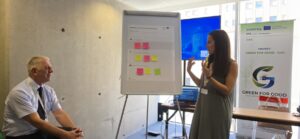
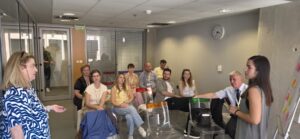
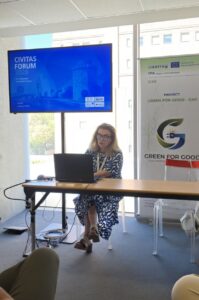
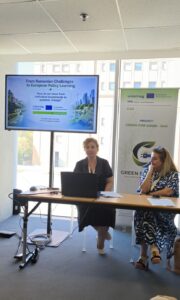
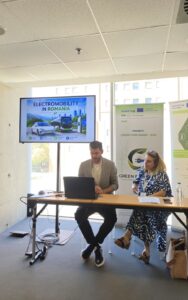
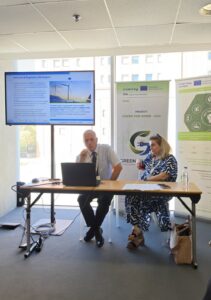
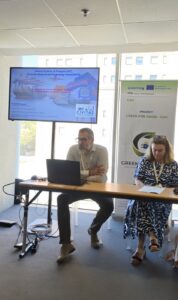
On 17 September in Thessaloniki, the second workshop within the Green for Good (G4G) project was held under the theme “Accelerating Electromobility Uptake: Strategies, Business Models and Local Engagement”, as part of the CIVITAS Forum 2026.

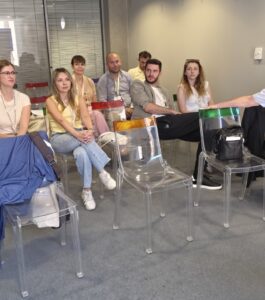
The workshop was organised by project partner CERTH and brought together project partners, experts and relevant stakeholders to exchange experiences and discuss how strategies, infrastructure, financing, regulation and local engagement can contribute to the wider uptake of electromobility.

Dr Vasileios Kappatos, Director of HIT/CERTH, presented Greece’s growing electromobility landscape, highlighting 6,282 BEV registrations in January–July 2026, up 28.8% year-on-year, and 8,700+ public charging points. The presentation stressed the need for better coverage, higher-power and smarter charging, supported by Greece’s strong renewable energy potential.

Prof. Dr Strahinja Trpevski presented the current state of electromobility in North Macedonia and highlighted the rapid growth in the number of fully electric passenger vehicles — from 561 in 2023 to 2,047 in 2025, representing around 0.3% of the total passenger car fleet. The presentation also covered the expansion of the public charging network, as well as the need for more reliable intercity infrastructure, greater access to home and workplace charging, and stronger integration of electromobility with renewable energy sources.

The experience of the City of Ioannina demonstrated how a local strategy can be translated into concrete actions, including plans to expand the electric vehicle charging network from 30 to 100 stations by 2038, electrify the public vehicle fleet, and introduce low- or zero-emission zones. Experience from the e-bike pilot scheme further highlighted the importance of establishing an appropriate regulatory framework in advance, involving stakeholders at an early stage, and planning operation and maintenance before introducing new mobility solutions.

The Romanian experts complemented the discussion with a broader public-policy perspective, emphasising that electromobility should be considered as part of an integrated sustainable mobility system, rather than simply as a transition to electric vehicles. The need to connect transport policies with charging infrastructure, the electricity grid, renewable energy sources, sustainable business models, data, governance and users’ needs was also highlighted.

The common message of the workshop was that infrastructure alone is not enough. For G4G, the exchange provided practical guidance for the next steps in the development and sustainable use of EV charging infrastructure in the cross-border area, with stronger local cooperation and closer links between electromobility and the broader objectives of the green and energy transition.

The project “Green for Good” – G4G is implemented within the Interreg VI-A IPA Greece – North Macedonia 2021-2027 Programme and is co-funded by the European Union and National Funds of the participating countries.