Promotional video for the project “Green for Good – G4G”

We are pleased to share the promotional video for the project “Green for Good – G4G”, which is implemented within the framework of the Interreg IPA Cross-Border Programme “Greece – North Macedonia 2021-2027”.

The project aims to contribute to a greener and more sustainable future by encouraging green mobility, using renewable energy sources, improving urban green spaces and raising public awareness of climate and environmental challenges.

Through joint cooperation, exchange of experiences and implementation of practical green solutions, the project partners work to create a cleaner, more resilient and more sustainable living environment for the citizens of the cross-border region.

The promotional video presents the main objectives, activities and expected benefits of the project, as well as the vision for a green transition and a better quality of life in the region.

Watch the video on our YouTube channel: https://www.youtube.com/watch?v=6-5fJebkiDQ

Representatives from CDSEPR participated in the 2nd General Meeting of the ELeVATE project in Spain

Representatives from the Center for Development of the South-East Planning Region (CDSEPR), as an associative partner, participated in the second General Meeting of the ELeVATE project: Empowering Women in Net-zero Technologies for the Smart Electricity for Buildings (SEB) sector – Bridging the Gap through Vocational Education and Training, which was held on 14–15 May 2026 in San Sebastian/Donostia, Basque Country, Spain.

The meeting was held at the Centro Elbira Zipitria and brought together partners from several European organizations in order to analyze the progress made so far and coordinate the next project activities.

In accordance with the agenda, the operational management of the project, the quality of implementation and updating of risks and measures within the risk register, as well as improving the efficiency of coordination between partners, were discussed.

The partners presented the progress of the baseline study, the analysis of the net-zero technologies sector for smart electrical systems in buildings, as well as the results of benchmarking and good practices. They also discussed the assessment of needs and barriers, focus groups with women, development of profiles, mapping and a competency framework for mentors, in order to strengthen the capacities and support of women in the net-zero technologies sector and the SEB industry.

Representatives from the CRJIPR actively participated in the discussions and contributed to the exchange of experiences and strengthening the regional perspective regarding the inclusion of women in the energy transition and technology sectors.

The meeting represents an important step in the further implementation of the ELeVATE project and strengthening European cooperation in the field of sustainable energy, innovation and gender equality.

Representatives from the Centre for Development of the South-East Planning Region participated in the 3rd General Meeting of the SEBCoVE project in Spain

Representatives from the Centre for Development of the South-East Planning Region participated in the 3rd General Meeting of the SEBCoVE – Smart Electricity for Buildings – Centres of Vocational Excellence project, which was held on 12 and 13 May 2026 in San Sebastian/Donostia, Basque Country (Spain), within the framework of the Erasmus+ program.

The two-day meeting brought together partners from several European countries, with the aim of monitoring the progress of the project, coordinating ongoing activities and planning the next steps for the development of centers for vocational education and excellence in the field of smart electrical systems and energy efficiency of buildings.

During the first working day, the activities of Work Package 4, which concerns the development of SEBCoVE centers, were presented, during which the creation of professional profiles, the development of digital curricula and training materials, the introduction of innovative learning methods, digital tools, augmented reality applications, as well as models for cooperation and financial sustainability of the centers were discussed.

Additionally, the partners discussed the implementation of the trainings and the certification process of the participants within the framework of Work Package 5, as well as the establishment of quality systems in accordance with ISO 21001 and EQAVET standards. Activities related to monitoring, evaluation, internal audits and mechanisms for monitoring the quality of the project activities were also presented.

During the second working day, discussions were held on project management, administrative and financial coordination, progress of project reporting and sustainability of results. Particular attention was paid to the dissemination and communication of the project, the organization of events and seminars, production of a promotional video, as well as networking with other European initiatives and projects.

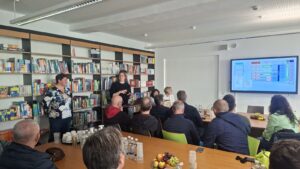
The participants also had the opportunity to visit an integrated vocational education and training center in Usurbile, where good practices and modern approaches in vocational education were presented.

The SEBCoVE project aims to contribute to the advancement of vocational education, the development of modern skills and the strengthening of cooperation between educational institutions, companies and organizations in the sector of smart electricity and sustainable technologies.

Centre for Development Participates in SIJMA Interregional Meeting in Leipzig

The Centre for Development of the South-East Planning Region actively participated in the second interregional meeting held on 28–29 April 2026 in Leipzig, Germany, organised within the project “Social innovations for job opportunities and development in mining areas in transition across Europe – SIJMA”, implemented under the Interreg Europe Programme. The meeting was hosted by the project partner Aufbauwerk Region Leipzig, Germany.

The meeting brought together project partners and regional stakeholders from across Europe with the aim of exchanging experiences, strengthening cooperation, and identifying innovative approaches to address labour market challenges through social innovation, particularly in regions undergoing transition.

Importantly, the delegation from the South-East Planning Region also included an expert and a stakeholder representatives, who were actively engaged in the workshop sessions. Their contribution ensured that the regional perspective was strongly reflected in the discussions, particularly in identifying challenges and proposing practical solutions relevant to the local context.

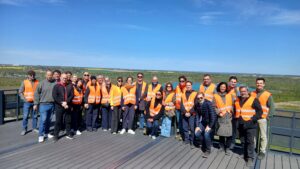
During the first day, participants took part in a series of study visits across the Leipzig district, where they explored practical examples of successful initiatives. These included a student cooperative in Borsdorf, a youth engagement centre at Störmthaler See, and the transformation of former mining areas into sustainable development zones. The visit also included a presentation on regional cooperation and structural transition in Central Germany, as well as a company visit showcasing innovation in the private sector.

On the second day, the meeting continued in Borna with a Steering Committee session and expert presentations focused on structural changes in European regions. A dedicated workshop enabled partners to jointly identify key challenges, compare regional contexts, and discuss potential solutions within the SIJMA framework. The session also facilitated the exchange of good practices and ideas for improving employment opportunities through social innovation, with active input from the regional expert and stakeholder.

The participation of the Centre contributed to strengthening the regional perspective of the South-East Planning Region, while also providing valuable insights that will support the development of future measures and policies aimed at enhancing employability and social inclusion.

The SIJMA project continues to serve as an important platform for collaboration, knowledge exchange, and the promotion of innovative solutions that respond to the evolving needs of regional labour markets.