Centre for Development Participates in SIJMA Interregional Meeting in Leipzig

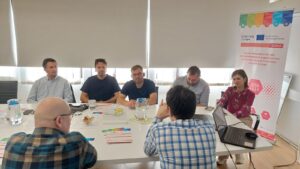
The Centre for Development of the South-East Planning Region actively participated in the second interregional meeting held on 28–29 April 2026 in Leipzig, Germany, organised within the project “Social innovations for job opportunities and development in mining areas in transition across Europe – SIJMA”, implemented under the Interreg Europe Programme. The meeting was hosted by the project partner Aufbauwerk Region Leipzig, Germany.

The meeting brought together project partners and regional stakeholders from across Europe with the aim of exchanging experiences, strengthening cooperation, and identifying innovative approaches to address labour market challenges through social innovation, particularly in regions undergoing transition.

Importantly, the delegation from the South-East Planning Region also included an expert and a stakeholder representatives, who were actively engaged in the workshop sessions. Their contribution ensured that the regional perspective was strongly reflected in the discussions, particularly in identifying challenges and proposing practical solutions relevant to the local context.

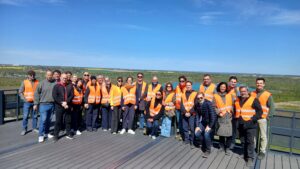
During the first day, participants took part in a series of study visits across the Leipzig district, where they explored practical examples of successful initiatives. These included a student cooperative in Borsdorf, a youth engagement centre at Störmthaler See, and the transformation of former mining areas into sustainable development zones. The visit also included a presentation on regional cooperation and structural transition in Central Germany, as well as a company visit showcasing innovation in the private sector.

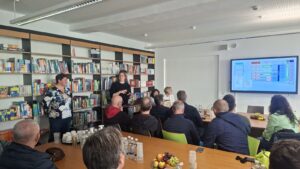
On the second day, the meeting continued in Borna with a Steering Committee session and expert presentations focused on structural changes in European regions. A dedicated workshop enabled partners to jointly identify key challenges, compare regional contexts, and discuss potential solutions within the SIJMA framework. The session also facilitated the exchange of good practices and ideas for improving employment opportunities through social innovation, with active input from the regional expert and stakeholder.

The participation of the Centre contributed to strengthening the regional perspective of the South-East Planning Region, while also providing valuable insights that will support the development of future measures and policies aimed at enhancing employability and social inclusion.

The SIJMA project continues to serve as an important platform for collaboration, knowledge exchange, and the promotion of innovative solutions that respond to the evolving needs of regional labour markets.

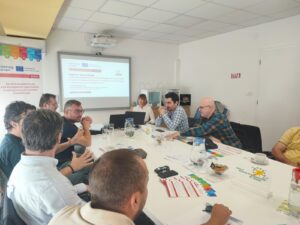
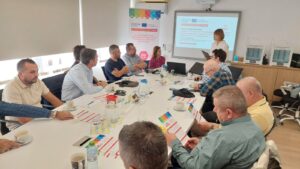
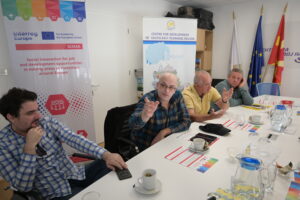
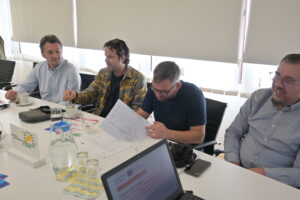
First meeting of the Regional Stakeholder Group for the SIJMA project

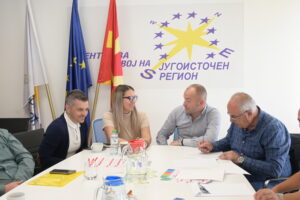
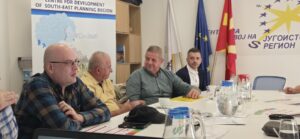
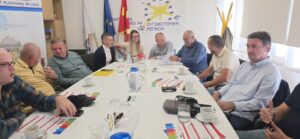
How social innovation combined with entrepreneurship can open up new opportunities for employment and sustainable development – ​​was the focus of the first meeting of the Regional Stakeholder Group for the SIJMA project.

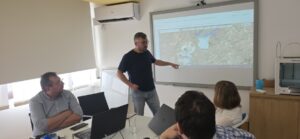
The meeting took place on 6 October 2025, at the premises of the Centre for Development of the South-East Planning Region in Strumica, and brought together representatives of local government, the business sector and civil society organizations. The project team shared experiences and good practices from the Asturias region in Spain, followed by an open dialogue and exchange of ideas with participants to identify local needs, define priorities and create recommendations for further economic and social development.

🎯 Why social innovation in the South-East region?

As highlighted at the meeting, social innovation is a key instrument for implementing new, creative and sustainable solutions to the social, economic, demographic and environmental challenges facing the region.

They enable the mobilization of local communities, civil society organizations and public institutions in joint problem-solving and the development of inclusive models of local development that contribute to a better quality of life.

The main challenge for the South-East region is the promotion of local and regional policies that encourage social innovation, youth participation and entrepreneurship – in order to create new employment opportunities, especially for young people and vulnerable groups, as well as strengthening social cohesion in rural and less developed municipalities.

The development of social entrepreneurship is of particular importance for the region, as it enables local communities to create sustainable economic activities that combine social and environmental goals with economic sustainability, contributing to long-term and balanced regional development.

💡 Connection with the Programe for Development of the South-East Planning Region
The project also focuses on the Programe for Development of the South-East Planning Region – a key document that defines the strategic priorities and directions for the development of the region.

Through SIJMA, the Programe will incorporate new content and concrete measures inspired by European experiences, making it a practical tool for improving working and living conditions, rather than just a formal document.

This approach allows European good practices to be adapted to the local context, fostering sustainable solutions, partnerships and innovations in the region.

🔍 Main objectives of the SIJMA project
The project aims to improve policy instruments that foster social innovation and entrepreneurship, especially among young people.

Planned activities include:
• Promoting social innovation in different economic sectors;
• Creating employment opportunities in the South-East region through future public calls and funding;
• Exchange and transfer of good practices between European regions;
• Improving policies to support social entrepreneurship.

🤝 SIJMA – Social Innovations for Job Opportunities and Development in Mining Regions in Transition is a project funded through the Interreg Europe Programme, implemented by the Centre for Development of the South-East Planning Region and Blink 42-21, in partnership with organizations from Spain, Hungary, Germany and Greece.