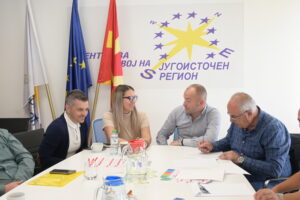
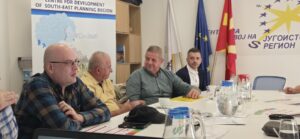
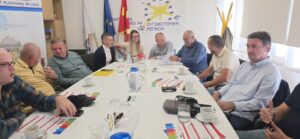
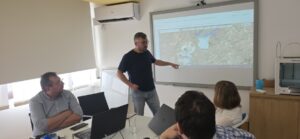
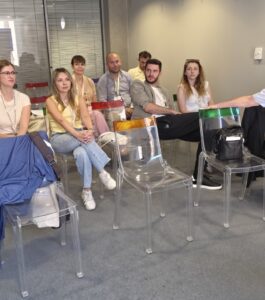
Validation of Factor Maps for precision farming digital skills

Focus group held within the framework of the CAAIVE project – Centers of Excellence in Vocational Education and Training for Artificial Intelligence in Agriculture

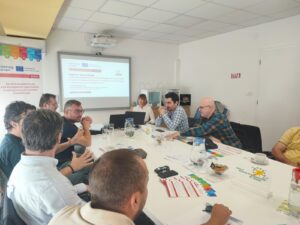
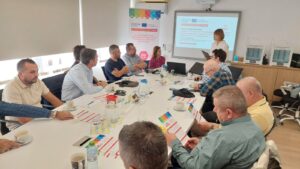
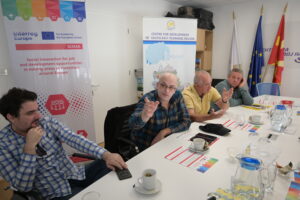
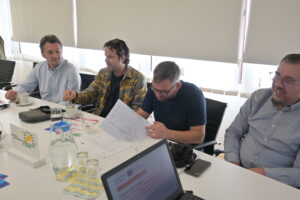
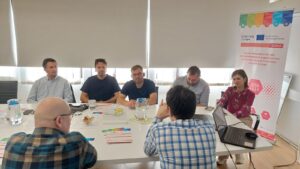
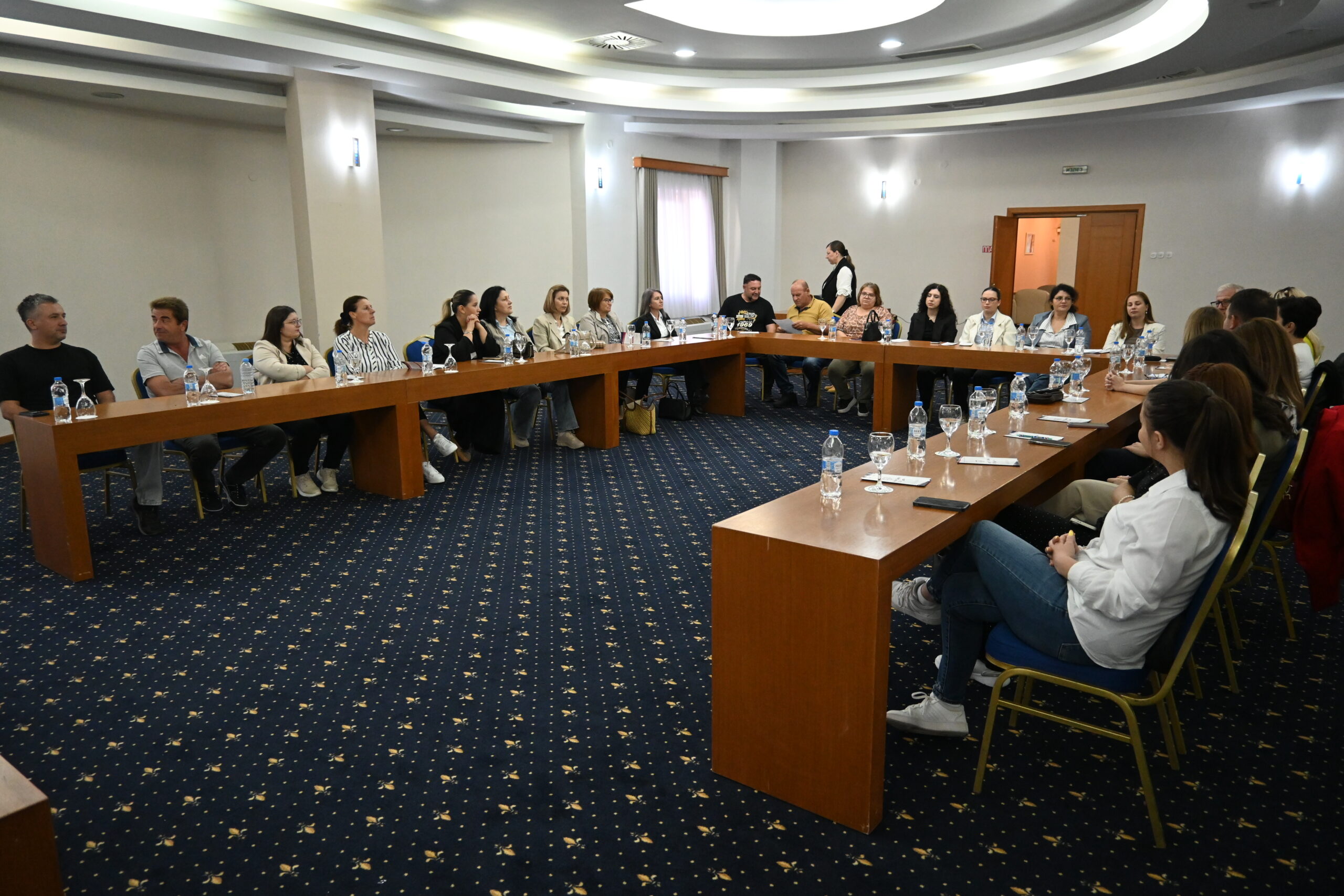
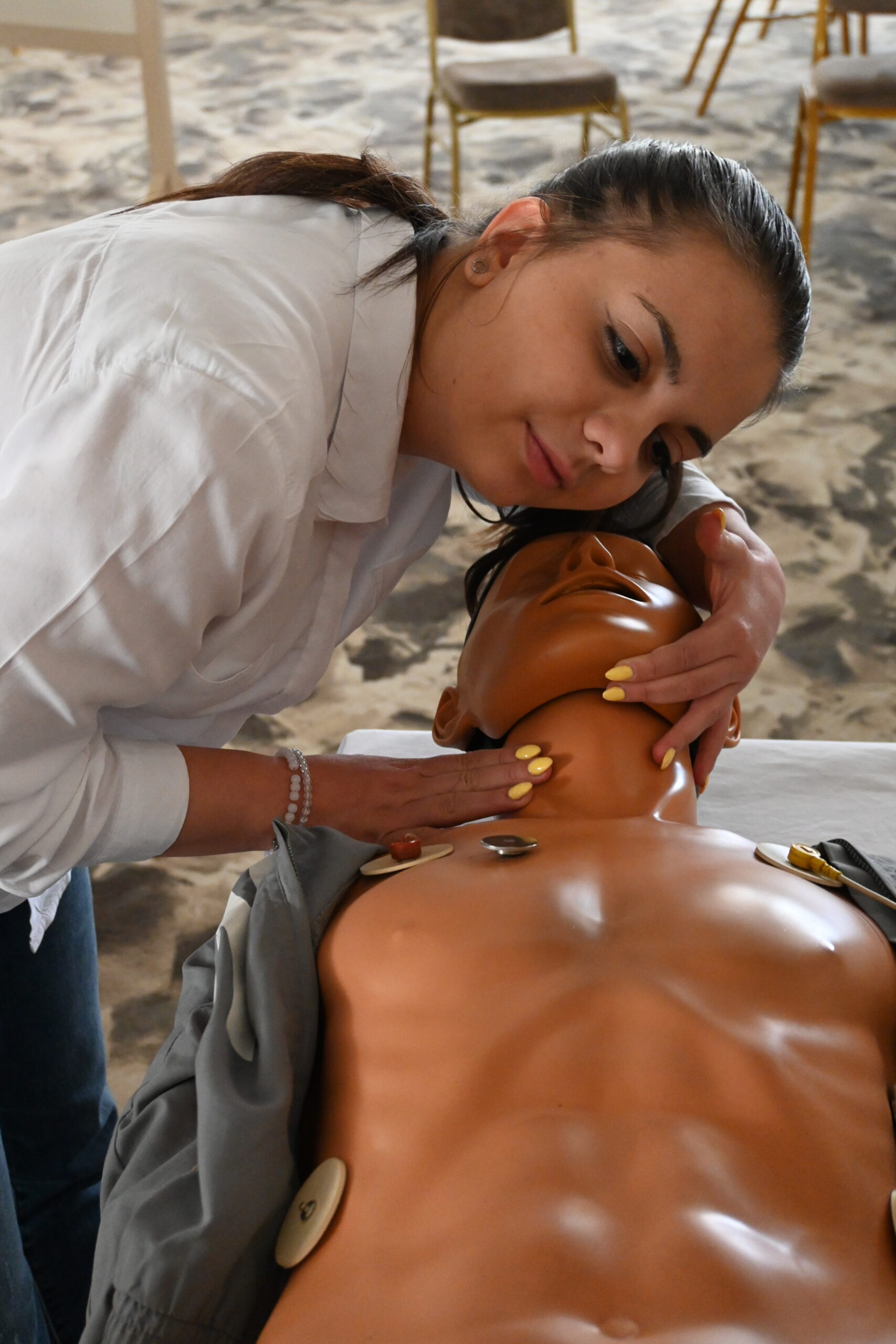
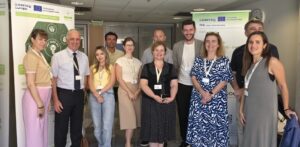
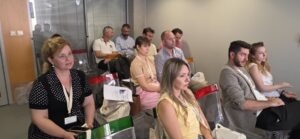
On July 10, 2026, at the premises of the Centre for Development of the South-East Planning Region in Strumica, a focus group dedicated to the validation of digital skills in the field of agriculture was held.

Representatives of relevant institutions, organizations and stakeholders from the agricultural sector participated in the discussion, who, through their experiences and practical observations, contributed to a better understanding of the current situation, needs and challenges related to digitalization in agriculture.

The participants discussed:
✅ the current level of use of digital tools and technologies in agriculture;
✅ the necessary digital competencies for modern agricultural production;
✅ the possibilities for applying artificial intelligence in the agricultural sector;
✅ the needs for training, development and validation of digital skills.

The conclusions and recommendations from the focus group will contribute to the development of appropriate solutions and activities within the CAAIVE project, aiming to improve digital capacities and prepare personnel for the future of agriculture.

🤝 We thank all participants for their active participation, shared knowledge and constructive discussion!

#CAAIVE #DigitalSkills #Agriculture #AI #VET #DigitalTransformation

Held the Second Meeting of the Project Team within the TX4ALL Project

On 7 and 8 July 2026, the Second Project Team Meeting was held within the framework of the project “Accessibility and Inclusion for All to Public Tourism Goods and Services (TX4ALL)”, co-financed by the European Union through the Interreg VI-A IPA Programme Greece – North Macedonia 2021–2027.

The meeting was held in a hybrid format, with an online session held on the first day, 7 July, with the participation of representatives from all project partners. During this session, the current status of the project implementation, progress on the work packages, financial implementation, reporting obligations, communication activities, as well as the status of public procurement procedures were reviewed.

On the second day, 8 July, the meeting continued with a physical presence at the Sirius Hotel in Strumica, organized by the Center for Development of the Southeast Planning Region (PB3). Within the framework of the technical coordination session, the project partners discussed the progress in the implementation of the planned activities, with a special emphasis on improving the accessibility of tourist destinations, the procurement of specialized equipment, the establishment of an inclusive beach in Dojran, as well as the fulfillment of the planned project results and indicators.

In addition, the dynamics of the implementation of the activities, challenges and potential risks in the coming period, as well as the necessary steps to ensure timely and efficient implementation of the project were reviewed. The meeting ended with the definition of specific activities, division of responsibilities between the partners and the coordination of the next steps.

The TX4ALL project aims to contribute to the development of more accessible and inclusive tourism by improving access to public tourism goods, services and infrastructure for all citizens and visitors in the cross-border region between Greece and North Macedonia.

#TX4ALL #Interreg #IPA #CrossBorder #Inclusion #AccessibleTourism #EUProjects

Exchange of Experiences and New Development Approaches within the Interreg VI-A IPA Bulgaria – North Macedonia Programme

Here is the English translation in a professional style:

From 9 to 12 June, a training session for the Strategic Council and capacity building on the Territorial Strategy under the Interreg VI-A IPA Bulgaria – North Macedonia Programme was held in Ohrid. A representative of the Center for Development of the South-East Planning Region participated in the training as part of the process for the implementation and monitoring of the Territorial Strategy.

The event provided an excellent opportunity to present the progress achieved so far in the implementation of the Territorial Strategy, highlighting the projects currently under implementation and their contribution to the development of the cross-border region.

Particular emphasis was placed on discussions regarding the future Interreg programming period 2028–2034 and the new results-based delivery approach, which aims to ensure greater impact and sustainability of supported initiatives.

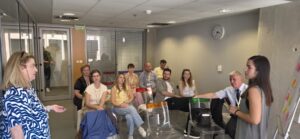
Through interactive workshops and group work, participants had the opportunity to simulate real-life scenarios and acquire new knowledge and practical skills related to institutional coordination, as well as to better understand the role of the Territorial Strategy as an important tool for strategic planning and priority setting.

The training facilitated the exchange of experiences, ideas, and good practices among participants, creating space for discussions on future challenges and opportunities within the Interreg VI-A IPA Bulgaria – North Macedonia Programme. At the same time, it contributed to further strengthening cross-border cooperation, reaffirming that people on both sides of the border share a common vision: prosperous local economies, vibrant and sustainable communities, better opportunities for young people, and a higher quality of life for all.

TX4ALL – ACCESSIBILITY AND INCLUSION FOR ALL TO PUBLIC TOURISM ASSETS & SERVICES

Project partners

The project is implemented through a partnership between organizations from Greece and North Macedonia, combining expertise in accessibility, tourism development, regional planning and social inclusion.

Project description

  • Acronym: TX4ALL
  • MIS: 6007137
  • Programme: Interreg VI-A IPA Greece–North Macedonia 2021–2027
  • Duration: 24 months
  • Priority: Support & Upgrade of Health & Social Services

TX4ALL – Accessibility and inclusion for all to public tourism assets & services is a cross-border initiative aimed at transforming the tourism sector into a more inclusive and accessible experience for all. Responding to persistent challenges of social exclusion and limited access, particularly for elderly individuals and people with disabilities, the project proposes a comprehensive model of inclusive tourism development.

The project focuses on two key regions: Thessaloniki in Central Macedonia, Greece, and the broader Southeastern Planning Region in North Macedonia, including Strumica and the Doiran Lake area. These locations will serve as focal points for physical interventions, technological upgrades and training programmes designed to ensure full accessibility to public tourism assets and services.

TX4ALL targets a wide range of beneficiaries. These include elderly tourists, people with disabilities or chronic conditions, and their families and companions. Additionally, tourism professionals, local businesses, public authorities, and unemployed individuals in the region are also expected to benefit, particularly through new training opportunities, capacity building, and job creation.

A major component of the project is the installation of innovative accessibility infrastructure. In Thessaloniki, over 200 smart pedestrian crossings will be equipped with audio-enabled systems to assist visually impaired individuals. Public buildings will be fitted with navigation systems for users with limited mobility or vision, while new, universally accessible signage will be installed in tourism sites across both countries. In the Doiran Lake area, a fully inclusive beach will be developed, complete with adapted infrastructure and mobility support.

To support independent travel planning and better information dissemination, TX4ALL will conduct extensive accessibility audits and create a multilingual Visitors Guide. This will help tourists identify and navigate inclusive routes and points of interest before and during their visit.

Beyond infrastructure, the project places strong emphasis on awareness and capacity building. It will provide specialized training for tourism professionals to improve their understanding of accessibility needs and launch a pilot consulting program to support businesses entering the accessible tourism sector. These efforts are designed to foster entrepreneurship and promote job opportunities, particularly for people with disabilities.

Finally, TX4ALL will implement a joint branding and international promotion strategy, positioning the cross-border region as a leading destination for inclusive tourism. Through coordinated campaigns and digital tools, the project aims to reach emerging global markets, attract new visitor segments and extend tourism activity into lesser-known areas and off-peak seasons.

In doing so, TX4ALL not only enhances the accessibility of the tourism offer but also contributes to sustainable economic development, regional cooperation, and social inclusion across the Greece–North Macedonia border region.

The Centre’s contribution to TX4ALL

 As Project Partner 3, the Centre for development of the South-East planning region is responsible for implementing a significant part of the project activities in North Macedonia, with a particular focus on improving accessibility to tourism assets and public services across the South-East Planning Region.

The Centre is also responsible for coordinating project activities in North Macedonia and ensuring cooperation with municipalities, tourism stakeholders, disability organizations and local communities throughout the implementation process.

The Centre will lead the implementation of several investments aimed at removing physical and information barriers for persons with disabilities, elderly visitors and people with reduced mobility. Key interventions include the establishment of an inclusive beach at Dojran Lake, the installation of a new accessible elevator and stair platform at the Centre’s premises, the procurement of mobile accessibility ramps for all ten municipalities in the region, and the deployment of universally accessible signage and audio-based wayfinding solutions.

In addition, the Centre will support the introduction of innovative mobility solutions through the procurement of accessible transport equipment and electric sightseeing vehicles, helping visitors with disabilities to access tourism destinations more independently and comfortably.

Beyond infrastructure investments, the Centre actively contributes to accessibility assessments, stakeholder consultations, awareness-raising activities and capacity-building initiatives for tourism professionals and service providers. Through close cooperation with municipalities, disability organizations, tourism stakeholders and project partners from Greece, the Centre aims to promote accessible tourism as a driver of social inclusion, regional development and cross-border cooperation.

By implementing these activities, the Centre contributes to creating a more inclusive tourism environment in the South-East Planning Region and to positioning the area as an accessible destination for both residents and visitors.

Expected Results

Through TX4ALL, public tourism assets and services in the cross-border area will become more accessible to persons with disabilities, elderly visitors and people with reduced mobility. The project will introduce new accessibility infrastructure, innovative wayfinding and information systems, inclusive tourism services and improved mobility solutions. It will also strengthen the capacity of tourism professionals and public authorities to address accessibility needs, while promoting the South-East Planning Region and Central Macedonia as attractive and inclusive tourism destinations for all visitors.

About the Programme

The Interreg VI-A IPA Programme “Greece – North Macedonia 2021 – 2027” is a cross-border cooperation Programme co-financed by the European Union under the Instrument for Pre-Accession Assistance (IPA III). This joint Programme empowers public authorities, private non-profit organizations and other institutions to work together on common challenges and problems, seeking for smarter solutions in the areas of Thessaloniki, Kilkis, Pella, Serres, Florina, Kozani and Vardar, Pelagonia, Southeast and Southwest. The strategy statement of the Programme is “to enhance territorial cohesion by improving living standards and employment opportunities holding respect to the environment and by using the natural resources for tourism”. The total budget of the Programme for the period 2021-2027 is 33.3 million €.

Project duration: October 2025 – October 2027

Total project budget: €1,385,108.68

Budget of the Centre for development of the South-East planning region: €315,991.00

The TX4ALL project is implemented within the framework of the Interreg VI-A IPA Programme “Greece – North Macedonia 2021–2027” and is co-funded by the European Union at 80% and by national funds at 20%.


The contents of this are the sole responsibility of the Centre for development of the South-East planning region and can in no way be taken to reflect the views of the European Union, the participating countries, the Managing Authority or the Joint Secretariat.


CDSEPR PARTNER IN NEW EU PROJECT CAAIVE – HELD KICK-OFF MEETING IN SERRES, GREECE

The Centre for Development of the South-East Planning Region (CDSEPR) is an official partner in the new CAAIVE – “Centers of Agricultural AI Vocational Excellence”, approved by the European Commission under the Erasmus+ Programme.

The project has a total budget of 3.76 million euros, a duration of 48 months, and involves 15 partners from 6 countries: the Republic of North Macedonia, Greece, Latvia, Poland, Italy and Romania.

As part of the start of the project activities, a Kick-off meeting was held in Serres, Greece, with the participation of all project partners, aimed at mutual introduction, detailed presentation of the project, its objectives and expected results, as well as defining the work packages and the roles of the partners in its implementation.

The meeting addressed the key activities, implementation timeline, and mechanisms for coordination, communication and cooperation among partners during the project execution.

With this, the CAAIVE project officially begins its implementation, focusing on improving vocational education and integrating artificial intelligence into the agricultural sector. The project is expected to contribute to strengthening innovation capacities, enhancing cooperation, and promoting sustainable development in the region.

2nd Project Meeting held within the “Green for Good” – G4G project

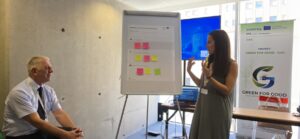
The 2nd Project Meeting within the project “Green for Good” – G4G was held on the 3rd of June in Thessaloniki, Greece. The meeting was hosted by the Centre for Research and Technology Hellas – CERTH, and brought together representatives of the project partnership.

During the meeting, the partners discussed the progress achieved so far in the implementation of the project, with a focus on coordination, communication and visibility activities, prepared project materials, ongoing deliverables and the next implementation steps.

The Centre for Development of the South-East Planning Region, as Lead Beneficiary, presented its current progress. Special attention was given to the planned investment in six fast EV chargers in the South-East region, as one of the main activities of the Lead Beneficiary. The partners also discussed the continuation of project communication, reporting obligations, future activities and the coordination needed for the upcoming implementation period.

This meeting provided an opportunity for exchange between partners on joint project activities, including sustainable tourism, green transition, low-carbon mobility and cross-border cooperation.

The project “Green for Good” – G4G is implemented within the Interreg VI-A IPA Greece – North Macedonia 2021-2027 Programme and is co-funded by the European Union and National Funds of the participating countries.


Promotional video for the project “Green for Good – G4G”

We are pleased to share the promotional video for the project “Green for Good – G4G”, which is implemented within the framework of the Interreg IPA Cross-Border Programme “Greece – North Macedonia 2021-2027”.

The project aims to contribute to a greener and more sustainable future by encouraging green mobility, using renewable energy sources, improving urban green spaces and raising public awareness of climate and environmental challenges.

Through joint cooperation, exchange of experiences and implementation of practical green solutions, the project partners work to create a cleaner, more resilient and more sustainable living environment for the citizens of the cross-border region.

The promotional video presents the main objectives, activities and expected benefits of the project, as well as the vision for a green transition and a better quality of life in the region.

Watch the video on our YouTube channel: https://www.youtube.com/watch?v=6-5fJebkiDQ

Representatives from CDSEPR participated in the 2nd General Meeting of the ELeVATE project in Spain

Representatives from the Center for Development of the South-East Planning Region (CDSEPR), as an associative partner, participated in the second General Meeting of the ELeVATE project: Empowering Women in Net-zero Technologies for the Smart Electricity for Buildings (SEB) sector – Bridging the Gap through Vocational Education and Training, which was held on 14–15 May 2026 in San Sebastian/Donostia, Basque Country, Spain.

The meeting was held at the Centro Elbira Zipitria and brought together partners from several European organizations in order to analyze the progress made so far and coordinate the next project activities.

In accordance with the agenda, the operational management of the project, the quality of implementation and updating of risks and measures within the risk register, as well as improving the efficiency of coordination between partners, were discussed.

The partners presented the progress of the baseline study, the analysis of the net-zero technologies sector for smart electrical systems in buildings, as well as the results of benchmarking and good practices. They also discussed the assessment of needs and barriers, focus groups with women, development of profiles, mapping and a competency framework for mentors, in order to strengthen the capacities and support of women in the net-zero technologies sector and the SEB industry.

Representatives from the CRJIPR actively participated in the discussions and contributed to the exchange of experiences and strengthening the regional perspective regarding the inclusion of women in the energy transition and technology sectors.

The meeting represents an important step in the further implementation of the ELeVATE project and strengthening European cooperation in the field of sustainable energy, innovation and gender equality.

Representatives from the Centre for Development of the South-East Planning Region participated in the 3rd General Meeting of the SEBCoVE project in Spain

Representatives from the Centre for Development of the South-East Planning Region participated in the 3rd General Meeting of the SEBCoVE – Smart Electricity for Buildings – Centres of Vocational Excellence project, which was held on 12 and 13 May 2026 in San Sebastian/Donostia, Basque Country (Spain), within the framework of the Erasmus+ program.

The two-day meeting brought together partners from several European countries, with the aim of monitoring the progress of the project, coordinating ongoing activities and planning the next steps for the development of centers for vocational education and excellence in the field of smart electrical systems and energy efficiency of buildings.

During the first working day, the activities of Work Package 4, which concerns the development of SEBCoVE centers, were presented, during which the creation of professional profiles, the development of digital curricula and training materials, the introduction of innovative learning methods, digital tools, augmented reality applications, as well as models for cooperation and financial sustainability of the centers were discussed.

Additionally, the partners discussed the implementation of the trainings and the certification process of the participants within the framework of Work Package 5, as well as the establishment of quality systems in accordance with ISO 21001 and EQAVET standards. Activities related to monitoring, evaluation, internal audits and mechanisms for monitoring the quality of the project activities were also presented.

During the second working day, discussions were held on project management, administrative and financial coordination, progress of project reporting and sustainability of results. Particular attention was paid to the dissemination and communication of the project, the organization of events and seminars, production of a promotional video, as well as networking with other European initiatives and projects.

The participants also had the opportunity to visit an integrated vocational education and training center in Usurbile, where good practices and modern approaches in vocational education were presented.

The SEBCoVE project aims to contribute to the advancement of vocational education, the development of modern skills and the strengthening of cooperation between educational institutions, companies and organizations in the sector of smart electricity and sustainable technologies.

Centre for Development Participates in SIJMA Interregional Meeting in Leipzig

The Centre for Development of the South-East Planning Region actively participated in the second interregional meeting held on 28–29 April 2026 in Leipzig, Germany, organised within the project “Social innovations for job opportunities and development in mining areas in transition across Europe – SIJMA”, implemented under the Interreg Europe Programme. The meeting was hosted by the project partner Aufbauwerk Region Leipzig, Germany.

The meeting brought together project partners and regional stakeholders from across Europe with the aim of exchanging experiences, strengthening cooperation, and identifying innovative approaches to address labour market challenges through social innovation, particularly in regions undergoing transition.

Importantly, the delegation from the South-East Planning Region also included an expert and a stakeholder representatives, who were actively engaged in the workshop sessions. Their contribution ensured that the regional perspective was strongly reflected in the discussions, particularly in identifying challenges and proposing practical solutions relevant to the local context.

During the first day, participants took part in a series of study visits across the Leipzig district, where they explored practical examples of successful initiatives. These included a student cooperative in Borsdorf, a youth engagement centre at Störmthaler See, and the transformation of former mining areas into sustainable development zones. The visit also included a presentation on regional cooperation and structural transition in Central Germany, as well as a company visit showcasing innovation in the private sector.

On the second day, the meeting continued in Borna with a Steering Committee session and expert presentations focused on structural changes in European regions. A dedicated workshop enabled partners to jointly identify key challenges, compare regional contexts, and discuss potential solutions within the SIJMA framework. The session also facilitated the exchange of good practices and ideas for improving employment opportunities through social innovation, with active input from the regional expert and stakeholder.

The participation of the Centre contributed to strengthening the regional perspective of the South-East Planning Region, while also providing valuable insights that will support the development of future measures and policies aimed at enhancing employability and social inclusion.

The SIJMA project continues to serve as an important platform for collaboration, knowledge exchange, and the promotion of innovative solutions that respond to the evolving needs of regional labour markets.